Showing posts with label IT. Show all posts

Friday, 17 March 2017

SHOP MASTER: Inventory is our Priority

Hi there! Do you own a supermarket or a pharmacy store? Are you into buying and selling or a business that involves inventory? If so, SHOP MASTER is for you. SHOP MASTER is an inventory control system, which allows you to store all necessary information on your every transaction. This control system helps you record all purchased and sold items, it automatically deducts purchased items from the total stock; it reflects your debtors account, creditors account, price of purchase, date of payment and the personnel responsible for every transition. With this software, inventory is our priority - this is the nucleus of SHOP MASTER.

This peculiar inventory control management system is mostly used by business organization involved in buying and selling. In his words, Kolawole Adeosun, the MD/CEO of MASK DATA SYSTEMS, the developers of SHOP MASTER says 'the purpose of inputting Information Technology to business process is to aid and ease business operations and also for quick decision making'. With his vast experience in the IT sector, he expresses that 'it is for a fact that every customer is a potential advertiser for your business. When you satisfy your customers and go an extra mile to meet their needs they remain loyal to you. When you give more than they have paid for, they also remain loyal to you.'

Every customer wants to be treated specially; especially during special days and events. Some appreciated it when you call them or their children on birthdays; when you check up on them, some love it when u check up on their staffs also. When you see a client or customers in the time of distress, many appreciate it when you offer free advice no matter how little. He further explained that for him, during festive period or days of heavy sales, lending a hand of assistance at their sales point shows that you can go the extra mile to see their  business succeed.

As an IT entrepreneur, he says many factors could cause you to venture into business. For him, it was the embargo on employment, underemployment and further encouragement from one of his lecturers in the higher institution. To be a successful entrepreneur, you have to be dogged and focused.
Rejecting job offers should not be a regular occurrence in your business; this would cause a gradual fold up of the venture. But in the cases where a business man or woman is forced to reject job offers what could call for this? Insincerity from the clients, when the job goes against your moral values and personal values. But all in all, learn to deal with difficult and impossible clients in different subtle ways towards a positive and continuos business relationship.

The online version of the SHOP MASTER will be out for sale very soon. It enables its users to  be able to manage and monitor every sales and purchase inventory from their mobile phones through an internet platform. With this, you know what is going on even while you are out on holidays, vacations or when you are indisposed.

For young entrepreneurs he says “ carve out a niche for yourself. The market is wide, concentrate on your core competent areas. Be honest with yourself, be dogged. Have a true sense of character and above everything, your customers want results not stories. No matter what, give them good results.”

KOLAWOLE ADEOSUN
MD/CEO Mask Data Systems
Shop D9/10, Skymem shopping complex, Wuse Zone 5, FCT Abuja.

13a, Egunjenmi SK (data building),
Dugbe alawo, Ibadan;

08023387782, 09096660635.
Monday, 13 March 2017

World wide web creator Tim Berners-Lee targets fake news

The inventor of the world wide web, Sir Tim Berners-Lee, has unveiled a plan to tackle data abuse and fake news.
In an open letter to mark the web's 28th anniversary, Sir Tim has set out a five-year strategy amid concerns he has about how the web is being used.
Sir Tim said he wants to start to combat the misuse of personal data, which creates a "chilling effect on free speech".
He also called for tighter regulation of "unethical" political adverts.
The British computer scientist said he wants the people who have helped develop the web with blogs, tweets, photos, videos and web pages to help come up with practical solutions to make a web "that gives equal power and opportunity to all".
Users are often unable to tell outlets what data they would not like shared, Sir Tim said. Terms and conditions were "all or nothing.

Sir Tim said he wants to work with companies to put "a fair level of data control back in the hands of people".
He also expressed concerns that government surveillance is going too far and stopping the web from being used to explore topics such as sensitive health issues, sexuality or religion.
Social media sites and search engines must be encouraged to continue efforts to combat the problem of fake news, Sir Tim said.
However, central bodies deciding what is true or not should be avoided, he added.
Certain algorithms can favour sensationalist information designed to surprise or shock users rather than reflect the truth and can "spread like wildfire", Sir Tim said.

What is fake news?


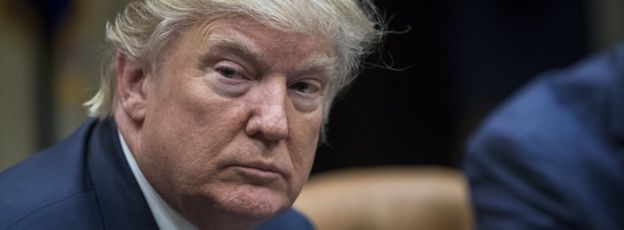
Donald TrumpImage copyright

The arrival of social media - and the fight for clicks - has meant real and fictional stories are presented in such a similar way that it can be hard to tell the two apart.
So-called "fake news" could be false information deliberately circulated by those who have scant regard for the truth but hope to advance particular (often extreme) political causes and make money out of online traffic.
Or it could be false information circulated by journalists who don't realise it's false.
Fake news has become so prevalent that the Commons Culture, Media and Sport Committee is now investigating concerns about the public being swayed by propaganda and untruths.
The committee was spurred by claims that voters in the US election were influenced by fake news, it said.
Pope Francis was reported to have backed Donald Trump's presidency campaign, for example, when he had not made an endorsement.
Meanwhile, Mr Trump himself has used the term fake news to refer to critical stories about his administration, picking out organisations such as CNN and BBC.

Sir Tim advocated transparency so users can understand how web pages appear on their devices and suggested a set of common principles for sites to follow.
And he raised concerns about how online political advertising had become a "sophisticated" industry.
Sir Tim said there were indications some targeted advertising was being used in "unethical ways" to keep voters away from the polls or directing people to fake news sites.
He suggested companies could put subscription payments and small automated charges in place to make money without these types of adverts.
However, despite highlighting issues on the world wide web which be believed need addressing, Sir Tim has admitted the solutions "will not be simple".

SXSW 2017: Why is the Vatican at a tech conference?

As Bishop Paul Tighe sat down for our interview, he joked that not only is he probably the only priest at South by Southwest, but also the only person with grey hair.
His presence here marks the first time the Vatican has attended the South by Southwest Interactive conference, and their panel - titled Compassionate Disruption - is one of this year's most talked about events.
"In a world where increasingly [we're] not invited to part of conversations, I think if people are interested in having us, we're delighted to be here.
"I want to learn and get a feeling for what are the things that are driving a generation of people who are in many ways shaping the world as we know it.
He glanced around the room.
"Really deep down, I see a lot of people looking for some sort of connectivity."
That's certainly true - though I get the sense for delegates here that means good wi-fi, rather than a strong sense of faith. So Bishop Tighe's mission is to get this industry to find real value in both.

Rough welcome

As the Vatican's Adjunct Secretary of the Pontifical Council for Culture, one of Bishop Tighe's many responsibilities is to run the social media accounts for the Pope, as well as considering ways in which the Catholic Church can stretch its influence into our digital lives.
Five years ago, Pope Benedict decided to set up a Twitter account - @Pontifex - which is continued today by Pope Francis. It was a decision the Church at the time felt was hugely symbolic.
"There's an environment that is kinda rough," Bishop Tighe said.
"There's a lot of trolling, a lot of negativity.
"But if the people who want to use it for good withdraw from it, then the trolls have won. There is a potential here to build connections, to learn from people who might surprise us."
The Bishop winced a little as I asked him whether Pope Benedict received a warm welcome on Twitter.
"There was a welcome from many, but there was a huge amount of negativity," he said.
"There were people saying 'let's launch a Twitter bomb, lets force them out of this environment'. But we stuck with it and said 'no, this is too important a forum'."
He said the current Pope handed down a clear strategy for communicating - not preaching - on Twitter.
"When Pope Francis gave us our instructions he said 'the one thing I want you to be above all is try to encourage people. It's a tough world, it's a hard world, let's be at least encouraging'."

'Disturbed'

Ten years ago, SXSW Interactive enjoyed what's still its most significant moment - the "launch" of Twitter. The service had been around for a little while before appearing at the festival, but it was here that its popularity skyrocketed.
The Vatican was hesitant to get involved, unsure of how to interact with the new medium - and whether it should be there at all.
"Maybe for the Church this world has disturbed us, has disrupted a lot of our ways of forming community. It's making us think again about how to do our business."
Part of that business, he suggested, was in making people consider what kind of online world they want to exist in, and how to achieve it in the face of increased hostility and division. In explaining it he coined a phrase that may just resonate with his audience here.
"A few years ago, everyone was talking about User-Generated Content. But I think we also need to recover a sense of User-Generated Culture. That's the choice of individuals.
"If you're spending your day with a lot of negative stuff in the environment, it's easy to imbibe that, to take that on board. But the challenge for all of us is to try and say 'yes, I'm going to be there, but I'm not going to be conditioned by the less positive sides of that'."

God vs Big Data

While it's the Vatican's first time at SXSW, it's certainly not the first technology conference it has attended. Bishop Tighe also attended Web Summit in Lisbon last year, and there, as it is here, the hot topic was the growing power of Artificial Intelligence (AI).
I put it to him that we are living at a time when the majority of people are far more likely to search Google for answers than they are to pray. When the Amazon Alexa in the corner of my kitchen can give me immediate answers based on data, why turn anywhere else?
"All the data in the world will still leave room for choices that I have to make," he said. "If we say big data will tell us what's right or wrong, then I am no longer an agent, and my choices have been determined for me. That doesn't correspond to my experience of being a human."
More profound, he said, will be the emergence of artificial intelligence and robotics in the working environment. Money aside, he argued we should be concerned about what a lack of work could do to our sense of self worth.
"Let's not romanticise it - some of the work that might be displaced is fairly tough, dangerous work and fairly menial. Maybe it's no great loss.
"[But] we need to reflect on how human beings who work are not just economic units producing products, they're people with stories and families."
I finished by asking him whether, given the chance, he'd offer some advice to Facebook founder Mark Zuckerberg over how he could change the world's largest online community for the better.
To my surprise, he didn't want to change anything - but he made a plea for technology innovators and entrepreneurs to consider how to involve the Church and others in building their products.
"I think it's really a time for a good, robust conversation between programmers and people who are coming form different ethical and philosophical positions.
"We must ensure that our human values and achievements, in terms of respecting dignity and the worth of people, will somehow be programmed into the machines we work with."
According to bbc.com

Kondo now has an app for tidying up

The newest tool for internationally acclaimed organizing guru Marie Kondo in her global battle against messy rooms is an app.
“My goal is to have as many people as possible who can get the job done in tidying up,” she said in an interview after speaking at the South by Southwest technology conference in Austin, Texas over the weekend.
“To achieve that, I’m implementing various measures, one of which is the app to support decluttering," said the woman whose name has been turned into a verb by followers who clean out clutter at home and say that have "Kondoed" their closets.
Kondo is known to global audiences for her best-selling books, including “The Life-Changing Magic of Tidying Up: The Japanese Art of Decluttering and Organizing,” which has been translated from Japanese to more than 40 languages, with more than 7 million copies sold worldwide.
The app called "KonMari," was launched a few months ago and gives out organizing tips, allows people to share before and after pictures, and provides a platform for her followers to socialize.
The followers of the woman who earned a spot on Time magazine’s 100 Most Influential People list in 2015 call themselves “Konverts."
But her critics see her as an irritating presence with a cult-like following, harping on the glaringly obvious need to be better organized.
Kondo has made an art of folding clothes into optimal shapes for storage and her KonMari disciples see her words as a philosophy about seeking a happier life by putting their homes in order.
Kondo spends 80 percent of her time outside of Japan, but with the help of technology, she wants to knock on the doors of more homes around the world.
"Tidying up is a broad theme that is relevant to anyone in any country," said Kondo, who has a knack for decluttering her quotes.